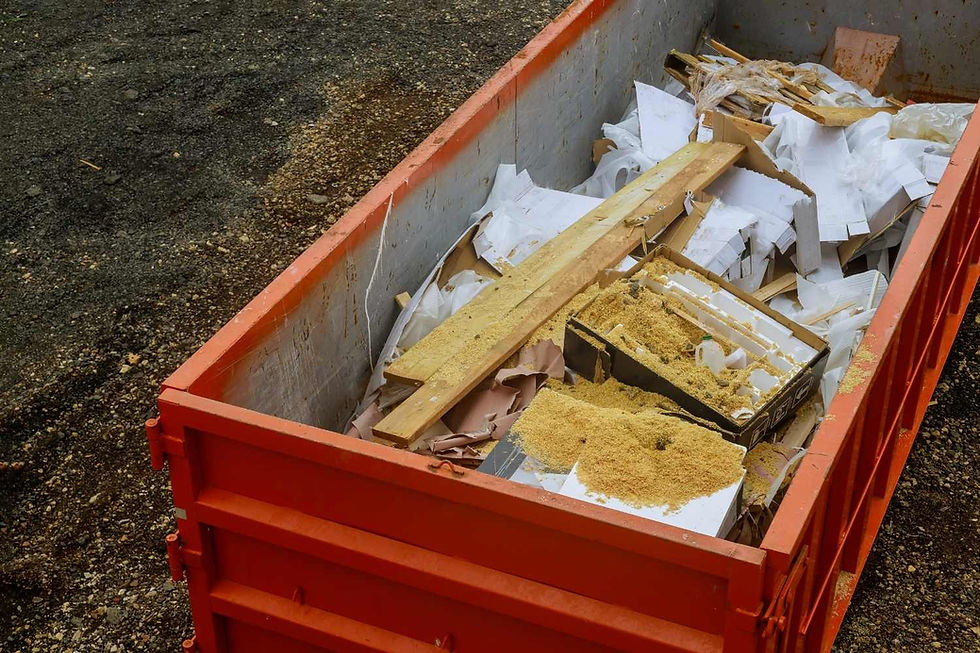
Flooded Basement Cleanup in Danbury: How to Separate Water-Damaged Debris Before Loading a Dumpster

Updated: 1 hour ago

What’s In This Guide
A flooded basement creates a different cleanup problem than an ordinary cleanout. Whether searching for a dumpster rental near me or planning a full restoration, the job is not simply to decide what to keep and what to throw away. Water can contaminate building materials, soak porous furnishings, damage electrical equipment, and mix with household chemicals. That makes sorting the debris before disposal an important safety and logistics step.
For Danbury homeowners, a roll-off container can help consolidate suitable demolition and cleanup debris, but not every flood-damaged item belongs in the same container. The U.S. Environmental Protection Agency (EPA) provides an example debris-sorting framework that separates materials into categories such as construction debris, household hazardous waste, large appliances, and electronics. That separation can reduce unsafe handling and make disposal more manageable.
If you are searching for a dumpster in Danbury, CT, after water damage, start with the debris itself. Identify what got wet, what may be contaminated, and what needs a separate disposal route before the container arrives.
Quick Facts
Sort flood debris before loading a dumpster because construction debris, electronics, appliances, and hazardous household products can require different handling.
Treat floodwater as potentially contaminated. Use appropriate protective equipment and avoid contact with water that may contain sewage or hazardous substances.
Remove and separate water-damaged drywall, insulation, carpet, and other porous materials when they cannot be safely cleaned and dried.
Keep paints, fuels, pesticides, cleaners, batteries, electronics, and questionable appliances out of the general debris pile until you confirm an appropriate disposal route.
Before booking a dumpster in Danbury, CT, describe the debris to the rental provider so you can confirm container size, placement, scheduling, and material restrictions.
Why Flooded Basement Debris Needs to Be Sorted First
Floodwater can carry sewage, chemicals, and other contaminants. EPA flood guidance advises people to avoid contact with floodwater when possible and to use protective equipment during cleanup. Electrical hazards also matter. Do not enter standing water where energized electrical equipment may be present, and have qualified professionals address electrical, structural, gas, or other serious hazards.

Material → Dumpster or Separate Disposal?
The following table uses EPA disaster-debris categories as a practical sorting framework. Actual dumpster acceptance rules can vary, so confirm materials with the provider before loading.
Material | Dumpster or separate disposal? |
Drywall, trim, cabinetry | Dumpster may be appropriate if nonhazardous and accepted. Confirm contamination and provider rules. |
Carpet and padding | Dumpster may be appropriate if accepted. Separate and remove porous material that cannot be cleaned and dried. |
Upholstered furniture | Confirm before loading. Contamination and local acceptance rules may affect disposal. |
Large appliances | Keep separate from general debris until the appropriate disposal route is confirmed. Refrigerants, oils, and other components may require special handling. |
Electronics | Separate disposal or recycling. EPA treats electronics as a distinct disaster-debris stream. |
Paints, fuels, pesticides, cleaners | Separate disposal. Treat as household hazardous waste when applicable. Do not mix with general debris. |
Suspected asbestos or lead-contaminated debris | Separate evaluation and compliant handling. Do not assume it is ordinary construction waste. |
How to Separate Flood Debris Before Loading a Dumpster
A deliberate sequence keeps the work area easier to manage and reduces the chance that restricted or hazardous items get buried under ordinary debris.
1. Make Sure the Basement Is Safe to Enter
Before moving debris, address immediate hazards. Floodwater may contain sewage and hazardous substances. Wear appropriate protective clothing, gloves, boots, and eye protection for the conditions. If there is a risk involving electricity, gas, structural damage, sewage, extensive mold, or chemical contamination, use qualified professionals rather than treating the project as a routine DIY cleanup.
2. Create Separate Staging Zones
Set up clearly defined areas before demolition starts. One zone can hold suitable construction and demolition debris. Other zones can hold electronics, appliances, household hazardous products, and items awaiting evaluation.
Keep hazardous products upright and in their original containers when possible. Do not mix chemicals or pour them into drains, onto the ground, or into a dumpster.
3. Remove Water-Damaged Drywall and Insulation Carefully
Drywall can absorb water above the visible waterline. If wall cavities were flooded, the cleanup may require removal of wet gypsum board and insulation so the structure can dry. EPA flood-cleanup guidance advises drying the home and discarding materials that cannot be cleaned and dried.
Cutting into walls can create additional hazards in older buildings. Renovation or demolition may disturb lead-based paint or asbestos-containing materials. If those hazards are possible, do not assume the debris is ordinary construction waste. Have the material evaluated and follow applicable federal, state, and local requirements.
Bag or stage manageable pieces of water-damaged drywall separately from electronics, chemicals, and appliances until dumpster acceptance is confirmed.
4. Roll Up Wet Carpet and Separate Padding
Carpet, padding, and other mold-damaged materials can hold large amounts of water and contamination. Remove porous materials that cannot be thoroughly cleaned and dried after flooding.
Cut large carpet sections into manageable rolls if it is safe to do so. Keep carpet, padding, and tack-strip debris together as a distinct stream. This makes the volume easier to estimate when choosing a roll-off container and keeps wet material from covering smaller items that require separate disposal.
5. Evaluate Furniture By Material and Contamination
Furniture with hard, nonporous surfaces may sometimes be cleanable, while upholstered furniture and particleboard products can be much harder to restore after contaminated flooding. Do not make disposal decisions based only on whether an item looks dry on the surface.
Separate heavily soaked upholstered furniture, mattresses, and composite-wood pieces from appliances and electronics. Before loading bulky items into a dumpster, confirm that the rental provider accepts them and ask whether special handling applies.
6. Keep Appliances Out Until You Confirm the Disposal Route
Flood-damaged refrigerators, freezers, air conditioners, dehumidifiers, washers, dryers, and other large appliances should not automatically go into a general debris container. Some contain refrigerants, oils, or other components that require special handling.
Do not plug in or test an appliance that was submerged or exposed to significant water until a qualified person has determined it is safe. Stage appliances separately and confirm the appropriate disposal or recycling route.
7. Separate Electronics and Batteries
Computers, televisions, monitors, printers, routers, game systems, power tools with batteries, and other electronics should form their own pile. EPA lists electronics as a separate category in its disaster-debris sorting guidance because they may require different management or recycling from general debris.
Remove loose batteries when it is safe to do so, but do not dismantle damaged lithium-ion batteries or devices that are swollen, hot, leaking, or otherwise unstable. Follow local fire-safety and disposal guidance for damaged batteries.
8. Isolate Household Hazardous Products
Basements often store paint, solvents, pesticides, pool chemicals, automotive fluids, fuels, cleaners, fluorescent lamps, and similar products. Flooding can damage labels and containers or cause products to leak.
Do not place leaking, unidentified, reactive, or hazardous products in a roll-off dumpster. Keep people away from spills and use local emergency or hazardous-material resources when a container is damaged or a substance cannot be safely identified.

What Can Go in a Dumpster After a Basement Flood?
A roll-off dumpster is most useful after the debris has been screened. Depending on the rental provider’s rules and the condition of the material, suitable loads may include accepted construction and demolition debris such as nonhazardous drywall, trim, damaged cabinetry, some flooring, and other project waste.
The key word is accepted. Flood conditions can change how a material should be handled, especially when sewage, oil, chemicals, mold, lead, asbestos, or other contaminants are involved.
Avoid loading flood debris before confirming dumpster rules, as removing prohibited items later is difficult. Ask key questions before booking a roll-off dumpster locally to verify accepted materials in advance.
Choosing a Dumpster Size for Water-Damage Cleanup in Danbury
A 10-yard dumpster can suit smaller cleanup loads. A 15-yard container provides more room for remodeling-scale debris, while a 20-yard dumpster is commonly used for larger renovation and construction projects. For small flooded areas, a small dumpster rental may be sufficient once appliances, electronics, and hazardous materials are removed.
Flood cleanup volume can be deceptive. Wet drywall, carpet, damaged cabinets, and broken furniture can fill a container quickly. Weight can also increase when porous materials are saturated. Describe the project when requesting a quote rather than choosing by room size alone.
Standard rentals are seven days, with extensions available upon request. Scheduling the dumpster after the first sorting pass can help you estimate the right size and avoid using container space for electronics, appliances, or hazardous products that need separate handling.
When Professional Help Makes Sense
Professional help is recommended for severe sewage, mold, structural, electrical, or hazardous material risks. When hauling sorted debris, many homeowners compare a dumpster against junk removal to easily keep restricted items out of the load.
Mold can develop after water intrusion, so prompt drying matters. However, speed should not replace safe handling. If you are unsure whether a material is contaminated or regulated, separate it and get qualified guidance before disposal.

Frequently Asked Questions
Can saturated drywall affect a dumpster’s weight limit?
Yes. Saturated drywall can add substantial weight to a load, which may affect container limits and hauling requirements. Let the dumpster provider know that the project involves water-damaged materials before choosing a container.
Can floodwater contamination change how basement debris should be handled?
Yes. Debris exposed to sewage, fuel, chemicals, or other contaminants may require different handling than ordinary construction waste. Keep questionable materials separate until their disposal requirements are confirmed.
What should I do with flood-damaged mattresses and upholstered furniture?
Keep them separate from appliances, electronics, and hazardous products. Because porous items can retain water and contamination, confirm whether the dumpster provider accepts them and whether any special handling is required.
Can I mix wet carpet, drywall, and cabinetry in the same dumpster?
Possibly, if the materials are nonhazardous and the rental provider accepts them. Confirm the load in advance, especially when the debris is heavily saturated or may have been exposed to sewage, chemicals, mold, or other contaminants.
What records should I keep after flood-debris disposal?
Keep receipts, disposal logs, photos, contractor records, and any hazardous waste documents. These records verify proper disposal. Landlords, who often use dumpster rental for tenant turnovers and rental property cleanouts in Danbury, should keep a file for each unit to document removed items.

Plan the Debris Stream Before the Dumpster Arrives
A flooded basement cleanup is easier to control when damaged items are sorted instead of combined into one mixed pile.
A.J. Novella Roll-Off Services offers 10, 15, and 20-yard dumpsters in Danbury and surrounding areas. Choosing a local dumpster rental company over a national broker ensures expert local service and flexible scheduling if your cleanup takes longer than expected.
Request a free quote to discuss your Danbury cleanup project and confirm current availability and material restrictions.