Ice Storm Cleanup in Connecticut: Dumpster Size + Disposal Rules


Connecticut’s winters are changing. Instead of predictable snowstorms, many homeowners now face more frequent freeze-thaw cycles that turn rain into ice, snap limbs off trees, and leave entire neighborhoods dealing with debris piles overnight.
The National Oceanic and Atmospheric Administration (NOAA) disaster data show that Connecticut has experienced 17 winter storm billion-dollar events since 1980, underscoring the increasing cost and disruption these storms have caused.
If you are planning a dumpster rental in Bethel, CT, here is the simple answer upfront: most ice storm cleanups fit best in a 15 or 20-yard roll-off dumpster, but the right size depends on debris volume, whether you have damaged building materials, and your disposal restrictions.
Highlights
|
Inside This Guide
Ice Storm Cleanup in Connecticut: Why the Right Dumpster Matters
Ice Storm Cleanup in Connecticut: Why the Right Dumpster Matters
Ice storm debris is deceptively heavy. Tree limbs soaked in ice can weigh far more than dry brush, and cleanup often includes more than branches, like damaged gutters, shingles, siding, insulation, or waterlogged carpet.
Choosing the wrong container usually leads to one of two problems:
You run out of room and pay for a second haul.
You overload the bin, which can result in delayed pickup or additional fees.
The most effective approach is to match your debris to dumpster rental sizes that can accommodate both bulk and weight. Connecticut also takes disposal seriously during storm recovery. The Connecticut Department of Energy and Environmental Protection (DEEP) emphasizes organized debris removal and safe disposal planning as part of storm debris management.
Dumpster Sizes Chart Explained: What's Available for Storm Debris
Common Roll Off Dumpster Sizes for Ice Storm Cleanup
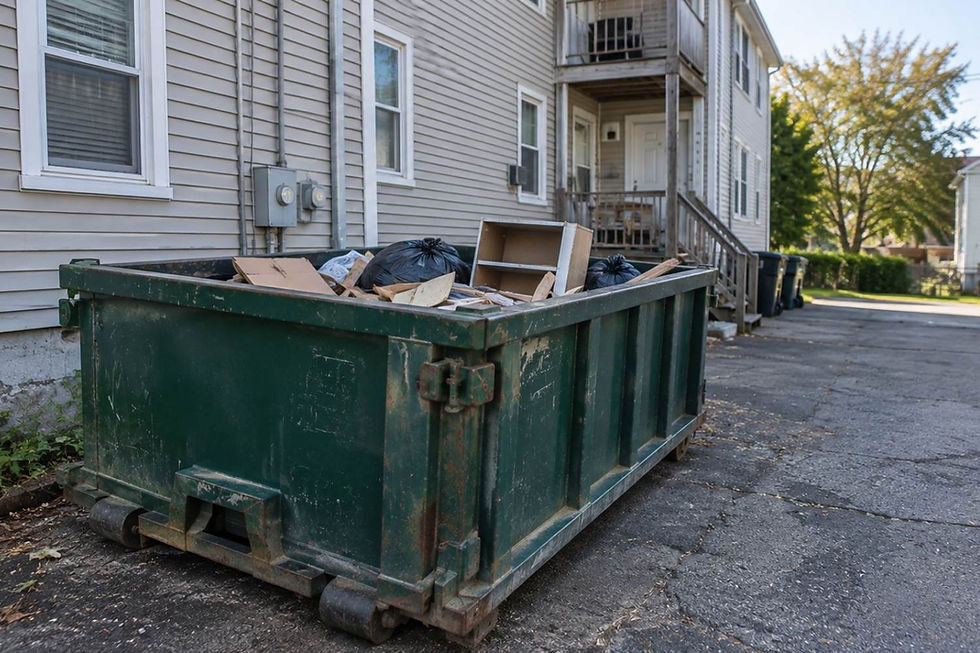
Roll-offs are the long, rectangular dumpsters delivered on a truck and placed on your driveway or designated space. They are the go-to option for storm cleanup because they handle bulky items like tree limbs and construction debris efficiently. When most homeowners talk about dumpster sizes, they usually mean roll-off containers measured in cubic yards.
Most ice storm cleanups in Connecticut fall into these categories:
10 yard dumpster for light storm cleanup and small loads
12 yard dumpster for moderate yard debris and small repairs
15 yard dumpster for heavier cleanup with mixed materials
20 yard dumpster for larger debris piles and common storm damage
30 yard and 40 yard dumpsters for major property damage or multi-day projects
Small Dumpster Options for Light Cleanup
If you only have a small amount of debris, you might be tempted to look for a small dumpster, like a 3 cubic yard dumpster. Those are typically used for businesses or tight-space trash collection and are not usually the best fit for ice storm debris because branches are long and awkward. For storm cleanup, a small roll-off (like a 10-yard) gives you much more usable space and easier loading.

How to Choose the Right Dumpster Size After an Ice Storm
What Size Dumpster Do I Need for Storm Cleanup?
Before choosing a dumpster size, three key questions can help you narrow it down:
How many trees or large branches came down?
Do you have any damaged building materials (shingles, siding, drywall)?
Are you disposing of wet household materials like carpet or furniture?
General rule:
If your cleanup is mostly brush and limbs, choose a 15 cubic yard dumpster for a mid-sized yard cleanup.
If you have large limbs, more than one major debris pile, or mixed materials, a 20 cubic yard dumpster is usually better.
If you’re dealing with serious storm damage and remodeling waste, jump to 30 or 40 yards.
How Big Is a 10 Yard Dumpster vs. a 20 Yard Dumpster?
People often underestimate space because branches are air-filled and awkward, not compact like bagged trash.
How big is a 10 yard dumpster? It typically holds the equivalent of a small pickup truck load repeated several times, best for light cleanup or single-area debris.
How big is a 20 yard dumpster? It roughly doubles that volume and is far better for storm cleanup because it gives you room for bulky branches without needing to pack perfectly.
10, 15, and 20 Yard Roll-Off Dumpster Dimensions (Storm Cleanup Matchups)
Dimensions matter because driveway space and loading access affect how efficient cleanup feels.
10 Yard Dumpster Dimensions
Typical 10 yard dumpster dimensions are about 12 feet long, 8 feet wide, and 3.5 to 4 feet tall (actual measurements vary slightly by provider). A 10 yd roll off dumpster works best for smaller debris piles and light storm cleanup.
15 Yard Dumpster Dimensions and When It’s the Sweet Spot
Typical 15 yard dumpster dimensions often land around 14 feet long, 8 feet wide, and about 4 feet tall. A 15 yard roll off container is a great sweet spot for homeowners who have significant limbs and debris but do not want to pay for more capacity than needed. It also fits well in many residential driveways.
20 Yard Dumpster Dimensions (Most Popular for Storm Cleanup)
Typical 20 yard dumpster dimensions are often about 22 feet long, 8 feet wide, and 4.5 feet tall. This is one reason the 20 yard roll off dumpster is popular: it offers plenty of volume without becoming too tall to load comfortably. It’s often the most practical choice for Bethel cleanup, especially if you’re clearing branches plus small amounts of damaged materials.
Bigger Dumpster for Heavy Damage: When 30 or 40 Yards Makes Sense
30 Yard Dumpster Dimensions for Major Cleanup Projects
Typical 30 yard dumpster dimensions are about 22 feet long, 8 feet wide, and 6 feet tall. Choose this size when you have multiple fallen trees, damaged fence sections, or storm damage repairs happening at the same time.
When a 40 Cubic Yard Dumpster Is the Best Option
A 40 cubic yard dumpster is usually reserved for major storm recovery, commercial properties, or severe home damage where you’re removing large quantities of construction debris and household waste together. It is overkill for most single-home ice storm cleanups, but a lifesaver when the project is truly large-scale.

Disposal Rules in Connecticut: What You Can and Can't Throw in a Dumpster
Disposal rules are where most storm cleanup plans fall apart. Connecticut’s DEEP outlines requirements for managing construction and demolition waste, which matters if your ice storm cleanup includes shingles, drywall, or building materials.
Allowed Ice Storm Debris
Most roll-off dumpsters can handle:
Tree limbs and branches
Brush and yard debris (check local rules if bagging is required)
Limited amounts of shingles and siding
Small amounts of drywall and insulation (ask your provider first)
Damaged furniture and general household debris
Some municipalities treat yard debris as a mandatory recyclable material and discourage mixing it with household trash. Local guidance varies, so it’s smart to confirm rules before loading.
Prohibited or Restricted Materials
The EPA classifies many common “garage and basement” items as household hazardous waste, including paint, oils, cleaners, pesticides, and certain batteries. These should not go into your dumpster.
Common restricted items include:
Propane tanks
Automotive fluids and motor oil
Paint and chemicals
Pesticides
Batteries (especially lithium)
Electronics
Asbestos-containing materials (from older homes)
Why Overloading a Dumpster Can Cause Pickup Delays
Even if the contents are allowed, overloading can stop your pickup. Common rules include:
Do not fill above the rim
Avoid letting branches stick out dangerously
Stay within weight limits
Ice storm debris is heavier than it looks. Wet wood and dense materials can quickly push you over weight limits, especially in smaller containers.
Tips for Faster Storm Cleanup Using a Roll-Off Dumpster
Make Cleanup Easier With Smart Loading Strategy
Efficiency matters when you’re trying to clear a driveway, sidewalks, and yard quickly. A few practical steps save time:
Stage limbs in one pile before loading
Cut long branches into shorter pieces so they fit neatly
Load heavy debris first to stabilize the base
Stack straight limbs along the walls to maximize space
Keep the center open for bulky items
Prevent Driveway Damage
Roll-offs are heavy. Protecting your driveway matters, especially in winter when freeze-thaw cycles make asphalt and concrete more vulnerable.
Place plywood under contact points when possible
Avoid soft ground where the bin could shift
Choose a flat placement area with truck access for pickup
Frequently Asked Questions
1. What items should not be disposed of in a landfill?
Hazardous materials like paint, chemicals, batteries, motor oil, propane tanks, and electronics should never go in a landfill. These items require special disposal.
2. What types of waste can safely be discarded in a landfill?
Most household junk and construction debris can go in a landfill, including furniture, wood, drywall, roofing shingles, and general trash (as long as it’s non-hazardous).
3. What's the difference between a dump and a landfill?
A dump is a general term for a disposal site, often unregulated. A landfill is engineered and monitored to safely manage waste and protect the environment.
4. Will a couch fit in a 15 yard dumpster?
Yes. Most standard couches fit in a 15-yard dumpster, though bulky sectionals or oversized sofas may take up more space.
5. How do you determine what dumpster size you need?
Estimate how much debris you’ll have, what type of material it is, and how bulky the items are. When in doubt, size up to avoid overflow or extra haul fees.

Dumpster Rental in Bethel, CT: Get Storm Cleanup Done Faster with A.J. Novella Roll-Off Services
When ice storms hit, speed matters. So does choosing the right size and avoiding disposal mistakes that delay pickup. A.J. Novella Roll-Off Services helps homeowners and property managers choose the right dumpster for storm debris, arrange delivery, and keep cleanup moving without the stress of guessing sizes.
If you are looking for dumpster rental in Bethel, CT, the fastest way to avoid problems is to:
Describe your debris type (branches only vs. mixed materials)
Estimate the number of piles or trees affected
mention any damaged building materials
Ask about restricted items before loading
Book the Right Dumpster Size for Your Bethel Ice Storm Cleanup
The fastest cleanup is the one you plan properly. Choose the dumpster size that prevents overflow, follow Connecticut disposal rules, and keep prohibited materials out so pickup stays on schedule. If you want a reliable local option for Bethel, A.J. Novella Roll-Off Services can help you select the best roll-off size and get it delivered when you need it.