What Are You Not Allowed to Put in a Rented Dumpster?


Key Takeaways
Not everything can go into a rented dumpster
Connecticut enforces strict electronics and hazardous waste
TVs and microwaves are commonly restricted items
Yard waste rules vary by town and season
Reading dumpster signs prevents costly mistakes
Table of Contents
You are not allowed to put hazardous materials, liquids, electronics, tires, appliances with refrigerants, medical waste, propane tanks, or certain furniture in a rented dumpster due to environmental hazards and regulations. These items require specialized disposal at designated facilities to prevent soil/water contamination and landfill issues.

Hazardous Materials
Paints (especially oil-based), stains, thinners, solvents, pesticides, herbicides (wet or dry), fertilizers, mercury, asbestos, lead, and cleaning chemicals
Liquids & Fuels
Motor oil, gasoline, diesel fuel, antifreeze, propane, fire extinguishers, and flammable liquids.
Electronics (E-Waste)
TVs, computers, phones, printers, game consoles, and other devices contain heavy metals.
Batteries
Car batteries, lithium-ion, and regular household batteries
Tires or whole tires.
Appliances and Tires
Whole tires, Refrigerators (due to Freon, microwaves, and AC units (due to refrigerants/Freon)
Medical Waste
Needles, prescription meds, biohazards.
Asbestos or those that contain toxic fibers
Heavy Materials
Concrete, bricks (often need separate arrangements)
Yard Waste/Food Waste
Usually separate or banned
IMPORTANT NOTE: Always confirm accepted materials with your dumpster rental provider, as disposal rules and allowances, such as for mattresses, appliances, or certain types of construction debris, can vary by location and landfill. A local company like A.J. Novella Roll-Off Services can clarify Connecticut-specific requirements upfront, helping you avoid delays, extra fees, or rejected pickups.
Why These Items Are Banned
Dumpster restrictions are not arbitrary. Items are prohibited because they pose real risks to people, property, and the environment, especially once waste reaches transfer stations and landfills in Connecticut.

Environmental Risk
Liquids, chemicals, and hazardous materials can leak during transport or after disposal. When substances like paint, solvents, or automotive fluids seep into the ground, they can contaminate soil and groundwater. This pollution is difficult and costly to remediate, which is why these materials are excluded under strict waste management dumpster rules.
Safety Hazards
Certain items present serious fire and explosion risks. Propane tanks, lithium batteries, and aerosol cans can ignite or explode when compacted or exposed to heat. These incidents put sanitation workers, truck drivers, and landfill personnel at risk and can damage equipment.
Landfill Operations Issues
Some bulky or dense materials interfere with landfill operations. Tires are a major concern because they trap methane gas and can rise to the surface, damaging landfill liners. Mattresses and box springs consume excessive space, do not compact well, and often require special handling, making them problematic in standard dumpster loads.
Recycling Laws and Disposal Regulations
Electronics and lighting contain materials that must be handled separately. E-waste such as TVs, microwaves, and other appliances may contain lead, cadmium, or other heavy metals. Fluorescent bulbs contain mercury, which is toxic even in small amounts. Connecticut regulations require these items to be recycled or processed at approved facilities rather than disposed of in a rented dumpster.
Items That May Be Restricted Depending on Your Dumpster Rental
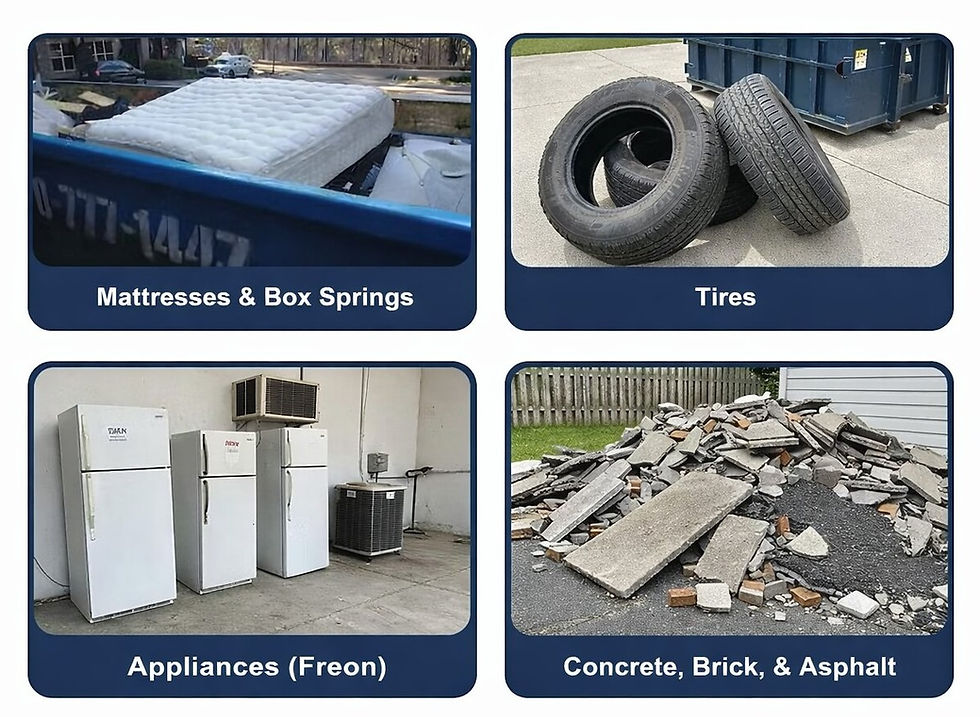
Some items are conditionally allowed but may come with additional rules or fees. Weight limits and disposal requirements may also vary, making it critical to clarify expectations before loading.
These include:
Mattresses and box springs
Tires
Refrigerators and air conditioners
Concrete, brick, and asphalt
Large appliances
Why Dumpster Restrictions Exist in Connecticut
Dumpster rules are designed to protect landfill workers, prevent environmental contamination, and comply with state recycling laws. Connecticut enforces some of the most comprehensive waste disposal regulations in the region, especially when it comes to hazardous waste and electronics.
Landfills and transfer stations inspect loads, and prohibited items are flagged quickly. That’s why reputable providers clearly communicate restrictions before delivery.
How Dumpster Signs & Rental Agreements Help You Avoid Mistakes

Dumpster Signs Clearly List Prohibited Materials
Most rented dumpsters display visible dumpster signs on the container itself. These signs list common prohibited items such as hazardous waste, electronics, tires, batteries, and liquids. The purpose of these signs is to provide a quick, on-site reminder of what cannot be placed in the dumpster once your project is underway.
These restrictions are based on landfill and transfer station acceptance rules enforced throughout Connecticut. When a dumpster arrives at a disposal facility, inspectors use these same guidelines to determine whether the load is acceptable.
Rental Agreements Define Legal and Financial Responsibility
Dumpster rental agreements go beyond general guidance and outline the customer’s responsibility in detail. These agreements typically specify prohibited items, weight limits, and materials that may result in additional charges if included.
From a legal standpoint, the rental agreement protects both the customer and the provider by clearly defining acceptable use. From a practical standpoint, it helps prevent surprise fees, rejected loads, or delays caused by improper disposal.
Landfill Inspections Enforce What’s Written
Landfills and transfer stations in Connecticut routinely inspect incoming loads for compliance. If prohibited materials are found, the dumpster may be rejected entirely or flagged for special handling. In many cases, the customer is responsible for any additional disposal costs associated with removing restricted items.
Dumpster signs and rental agreements align directly with these inspection standards. They are not internal company policies; they reflect the rules enforced at the disposal facility level.
Why Reading the Fine Print Saves Time and Money
Many disposal issues happen because customers assume certain items are allowed based on size or convenience. Electronics, appliances, and yard waste are common examples. Reviewing dumpster signs before loading and reading the rental agreement before delivery can prevent last-minute confusion and project delays.
Understanding these guidelines upfront is especially important for short-term rentals, where timing and pickup schedules are tight.
How Local Providers Help Clarify Restrictions
Reputable local dumpster companies explain restrictions clearly before delivery and are available to answer questions about specific items. Because Connecticut regulations can vary by material and municipality, working with an experienced local provider reduces the risk of misinterpretation.
When in doubt, asking before tossing an item is always faster and cheaper than dealing with a rejected load later.
Choosing the Right Dumpster Rental Near Me in Connecticut
Working with a local provider makes compliance easier. A Connecticut-based company understands regional regulations, landfill requirements, and seasonal restrictions.
A.J. Novella Roll-Off Services offers:
Reliable, on-time dumpster delivery
Flexible sizes (10, 15, and 20 yards)
Affordable short-term rental options
Knowledge of local waste management rules
That local expertise helps customers avoid disposal errors before they happen.
Read more about this topic: 8 Ways to Use a Dumpster in the Summer
Frequently Asked Questions | Dumpster Rental
What are you not allowed to put in a rented dumpster?
You are not allowed to put hazardous materials, electronics, liquids, tires, batteries, or chemicals in a rented dumpster. These items are restricted under Connecticut waste management dumpster rules and can result in extra fees or rejected pickup if placed in the container.
Can you put a TV in a dumpster?
In most cases, no. Many people ask, can you put a TV in a dumpster, but Connecticut requires electronics like TVs to be recycled separately. Whether it’s a flat-screen or an older CRT model, TVs are typically not accepted in dumpster rentals.
Can you throw TVs in the dumpster if they’re broken?
Even if a TV is damaged or no longer working, you usually cannot throw TVs in the dumpster. Broken electronics are still subject to recycling laws and must be handled through approved disposal programs rather than standard dumpster rentals.
Can I throw a microwave in the garbage or dumpster?
A microwave may look like a regular appliance, but it contains electronic components that are often restricted. If you’re wondering, can I throw a microwave in the garbage, the answer depends on local disposal rules, but many dumpster rentals do not allow microwaves.
Can you put yard waste in a dumpster?
Whether you can put yard waste in a dumpster depends on the type of material and local regulations. Leaves, grass clippings, and branches are often restricted or require separate disposal, especially in Connecticut municipalities with seasonal yard waste programs.
Rent the Right Dumpster in Connecticut Without the Guesswork
Knowing what you’re not allowed to put in a rented dumpster protects your budget, your timeline, and the environment. The easiest way to stay compliant is to work with a knowledgeable local provider who can guide you before the dumpster arrives.
If you’re planning a cleanup, renovation, or landscaping project in Connecticut, A.J. Novella Roll-Off Services can help you choose the right dumpster and avoid prohibited items from day one.